
We’re off to the zoo! In a lively story told with colorful photographs, text and American Sign Language. Mary Beth and a group of children spend a fun filled day visiting the animals. The day is a full one, with stops to feed the sea lions, eat lunch, and find Roger. As the children see their favorite animals, they demonstrate the signs and fingerspelling for each one.
Author: Isabel

Artists of Handcrafted Furniture at Work
Some artists paint pictures on canvas. Some mold sculptures of clay. Others weave rugs from fibers. Still others create furniture from wood. These furniture makers, devoted to furthering art and fine workmanship in daily living, produce originally designed, hand-made objects – music stands, storage chests, rocking chairs.

Finding a Way: Living with Exceptional Brothers and Sisters
Most of the time, it’s fun to be a brother or sister to someone you can talk to, play with, and dream with. But when disagreements happen or problems come up, having a brother or sister isn’t so easy. Being the brother or sister of a child with special requirements can sometimes make things even harder.

A Williamsburg Household
Life in an eighteenth century home in Williamsburg, Virginia as seen through the eyes of a slave family. We experience daily chores, work and caring that the slaves are responsible for.

From Map to Museum: Uncovering Mysteries of the Past
From Map To Museum is the behind the scenes story of one museum collection. This intriguing photo essay focuses on a major method of museum acquisition–the archeological dig–and one modern-day explorer, Dr. David Hurst Thomas, curator of anthropology at the Museum of Natural History in New York City and a leading archeologist in the field. It is a long painstaking journey from map to museum that begins on a tropical island off the coast of Georgia, where a real-life expedition is uncovering a lost Spanish mission and an extinct group of Indians, and ends in the storage rooms, curator’s offices and exhibit cases of the museum.

Jackpot of the Beagle Brigade
This is the story of Jackpot, a little brown beagle that does a very big job for all of us. Working at John F. Kennedy International Airport, Jackpot makes sure products that could be carrying disease—and could infect our agriculture—don’t get into this country.

Joshua’s Westward Journal
Joshua Carpenter and his family have been traveling for over a month now, heading west to Illinois, or possibly even Iowa. With all their possessions in a crowded Conestoga wagon, they cover mile after mile of the dusty, government-built trail called the National Road. Food is often scarce, and sometimes the water in their barrel reaches frighteningly low levels. But courage, and dreams of affordable land and a better life, spur them on.
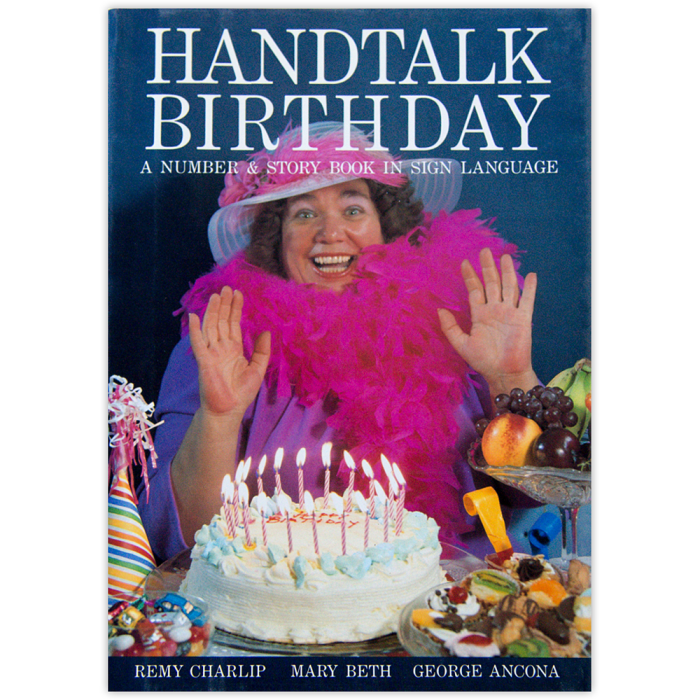
Handtalk Birthday
Mary Beth is awakened by a light bulb flashing over her head. Someone’s at the door. Shuffling to the door in her nightgown and bunny slippers. She opens the door and SURPRISE! All her friends are there to celebrate her birthday. They sign and fingerspell HAPPY BIRTHDAY, give presents, eat goodies and cake, and are astonished by the birthday wish.

Living in Two Worlds
Toah’s father is black, Shashi and Anil’s father is Asian Indian, Jesse’s mother is Chinese, and Megan’s father is himself biracial—a mixture of Cherokee and black. Each child’s other parents is white. ust under 2 percent of all children born in the United States are of mixed racial and ethnic heritage. Like all children, biracial children combine their parents’ differing physical features. But biracial children grow up with an everyday awareness that they are living in two worlds—since each is from two cultural backgrounds.

Making a New Home in America
Leaving the country of one’s birth to live in another is never easy. Saying good-bye to old friends and familiar customs is difficult, even though the reasons for leaving may be as compelling as a war-torn homeland or a government that does not allow its people to practice the religion of their choice or to talk freely about ideas.

The Glorious Fourth in Prairietown
It is July 4, 1836, and Prairietown, Indiana, is celebrating the biggest and most exuberant holiday of the year. This is the “Glorious Fourth”, and in Prairietown–and across the country–townfolk and strangers passing through have stopped their day-to-day lives to join together as Americans to commemorate their young nation’s birthday.

Pioneer Children of Appalachia
About 1800, Americans moving westward settled in the hills and hollers of “northwestern Virginny,” an area in what we now call Appalachia. In those days before supermarkets, factories, and cars, work was endless, and all family members–children as well as their grandparents–were important for survival.
 George Ancona | Children's Books